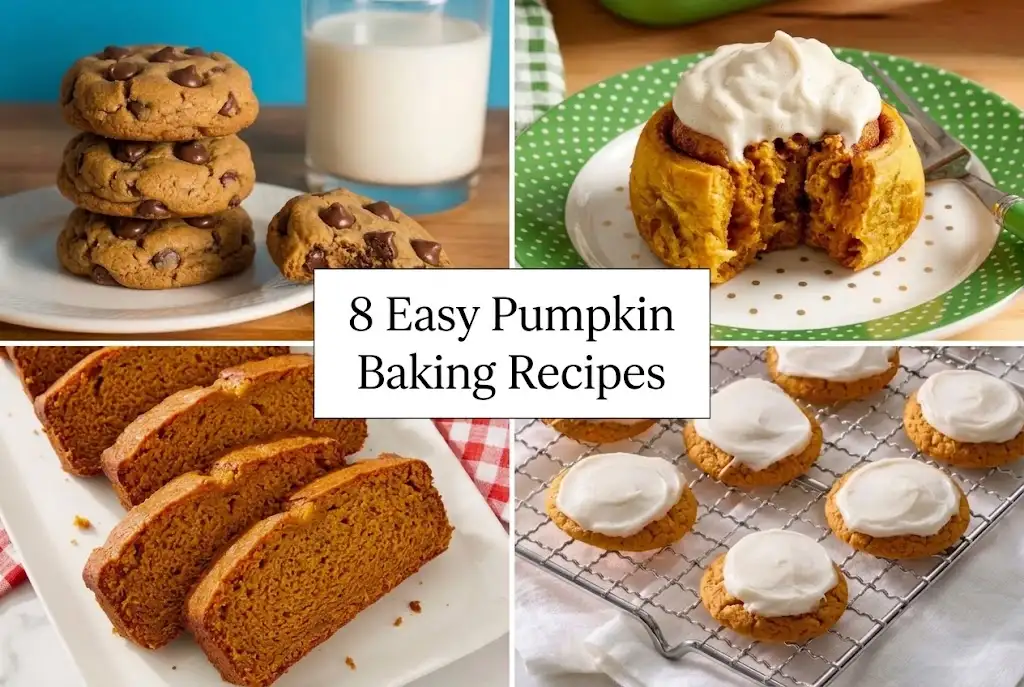

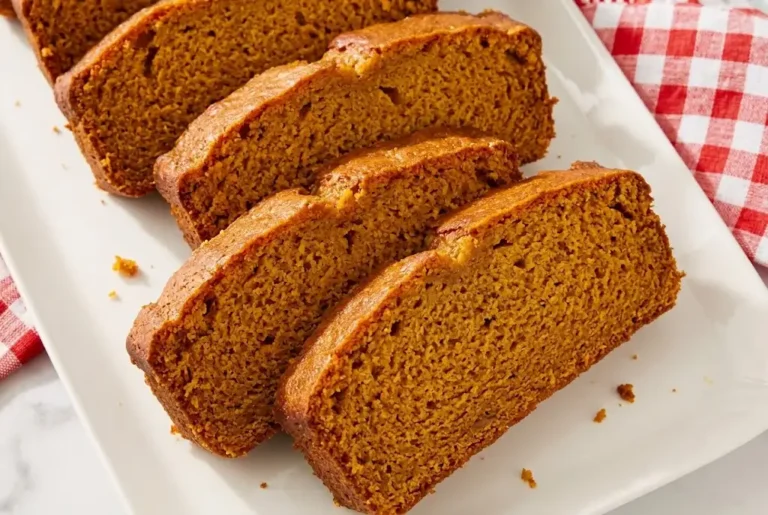
Moist pumpkin bread is a spiced quick bread made with pumpkin puree, oil, eggs, and warm fall spices, baked in a loaf pan until the center is tender but fully set. Unlike drier versions made with too much flour or not enough fat, this one stays soft and rich for days, with a deep golden crust and a crumb that practically melts on your tongue.
This pumpkin bread recipe is for anyone who wants a foolproof, ultra-moist loaf without babysitting the oven or second-guessing whether the center is actually done. It comes together in one bowl with pantry staples you probably already have, and it gives you clear, sensory cues so you’ll know exactly when to pull it out, no more guessing games. If you’re in the mood for another pumpkin bake, these pumpkin cream cheese muffins are a lovely bite-sized option.
Table of Contents
Why You’ll Love This Recipe
- It’s genuinely moist, not just “moist for pumpkin bread.” The oil keeps every slice tender for days without drying out, even by day three or four.
- One bowl, no mixer, and about 15 minutes of hands-on prep before it’s in the oven doing all the work for you.
- You’ll know exactly how to tell when it’s done, so you never end up with a gummy center or an overbaked crust again.
- It’s easy to dress up with chocolate chips, toasted walnuts, or a simple glaze without throwing off the texture.
Essential Equipment for This Recipe
- 9×5-inch loaf pan (light metal preferred): Metal conducts heat more evenly than glass, which helps the center bake through before the crust over-browns. If glass is all you’ve got, just drop your oven temperature slightly to compensate.
- Instant-read thermometer: Optional, but it’s the single best tool for guaranteeing your loaf is fully baked in the center without drying out the edges. I reach for mine on nearly every quick bread I make now, it’s saved me from pulling a loaf too early more times than I can count.
- Kitchen scale: Pumpkin puree and flour are both notoriously inconsistent when measured by cup alone. Weighing them is the simplest way to avoid a heavy, gummy loaf.
What You Need to Make the Best Pumpkin Bread
Note: You will find the exact measurements and full instructions in the printable recipe card at the bottom of this post.
The base of this loaf is all-purpose flour, along with baking soda and a touch of baking powder, which work together to give the bread lift without tipping it into cakey territory. Fine salt balances the sweetness, and a warm blend of cinnamon, ginger, nutmeg, and a small pinch of ground cloves gives it that unmistakable fall aroma. If you’d rather simplify things, a tablespoon of pumpkin pie spice can stand in for all four spices at once, no one will know the difference. Pumpkin is also a nutrient-rich winter squash; the USDA’s pumpkin nutrition guide provides general nutrition information for fresh and canned forms.
For the wet ingredients, room-temperature eggs help everything blend into a smooth, silky batter, while a mix of brown and granulated sugar keeps the crumb moist and adds a subtle caramel note as it bakes. Plain pumpkin puree, not pie filling, which already comes loaded with sugar and spice, is what gives this bread its deep color, earthy flavor, and signature moisture. Neutral oil is the real secret to a tender, long-lasting crumb, and a splash of vanilla rounds out the spice blend nicely.
Smart Substitutions Worth Knowing
If you need this dairy-free, you’re actually in luck: since the recipe relies on oil rather than butter, it’s naturally dairy-free without any swaps needed. For a gluten-free version, a 1:1 gluten-free flour blend with xanthan gum built in works well in place of the all-purpose flour, and the crumb holds together just as nicely.
How to Make Pumpkin Bread Step-by-Step
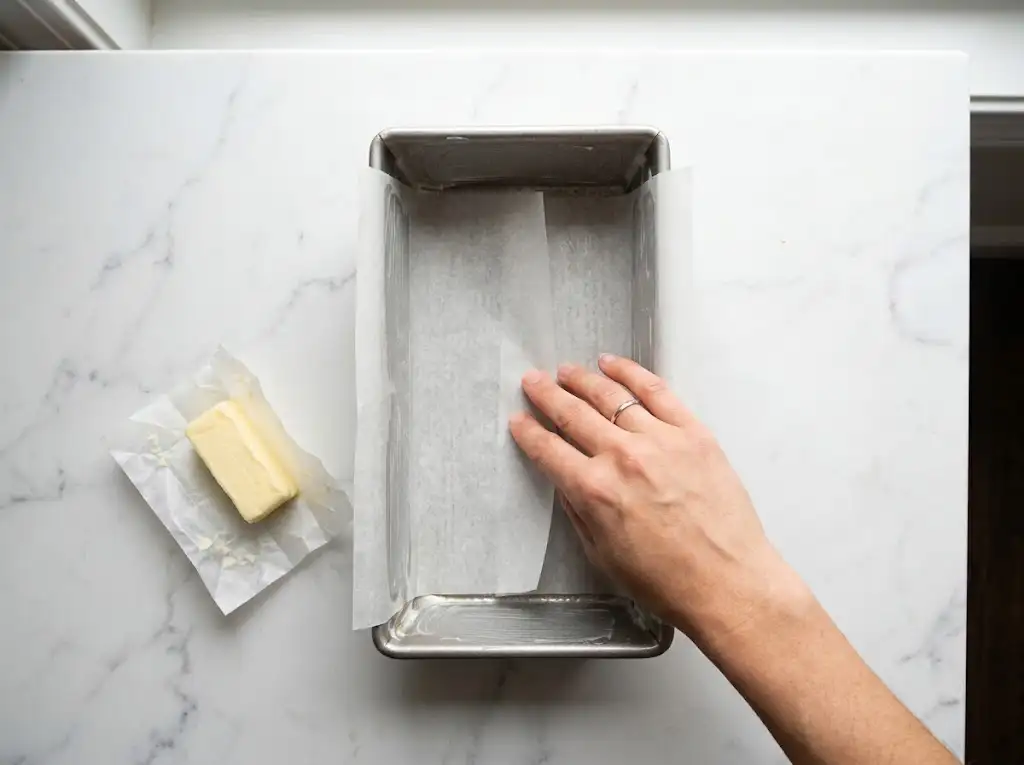
Step 1: Preheat your oven to 350°F (175°C). Grease your 9×5-inch loaf pan and line it with parchment paper, leaving a little overhang on the sides to help you lift the loaf out later. If you’re using a glass pan instead of metal, lower the temperature to 325°F.
Step 2: In a large bowl, whisk the eggs with the brown sugar and granulated sugar until the mixture looks smooth and slightly lighter in color, almost like a thin caramel. This only takes a minute or two by hand.
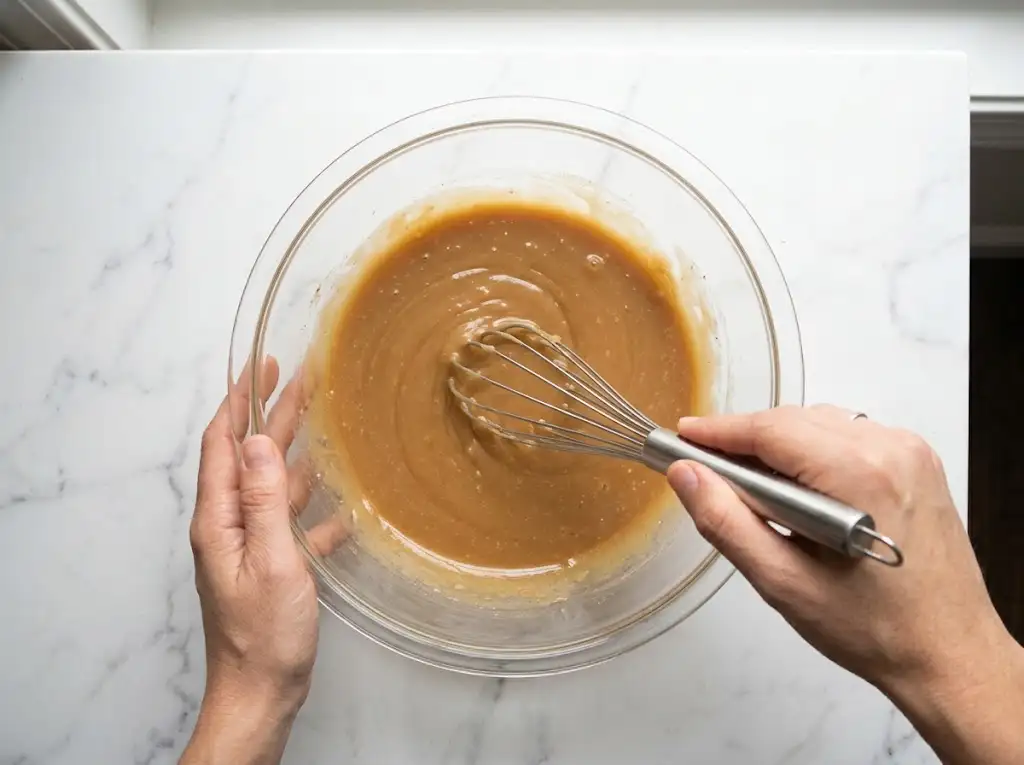
Step 3: Whisk in the pumpkin puree, oil, and vanilla extract until everything blends into a uniform, deep orange batter with no oily streaks left sitting on top.
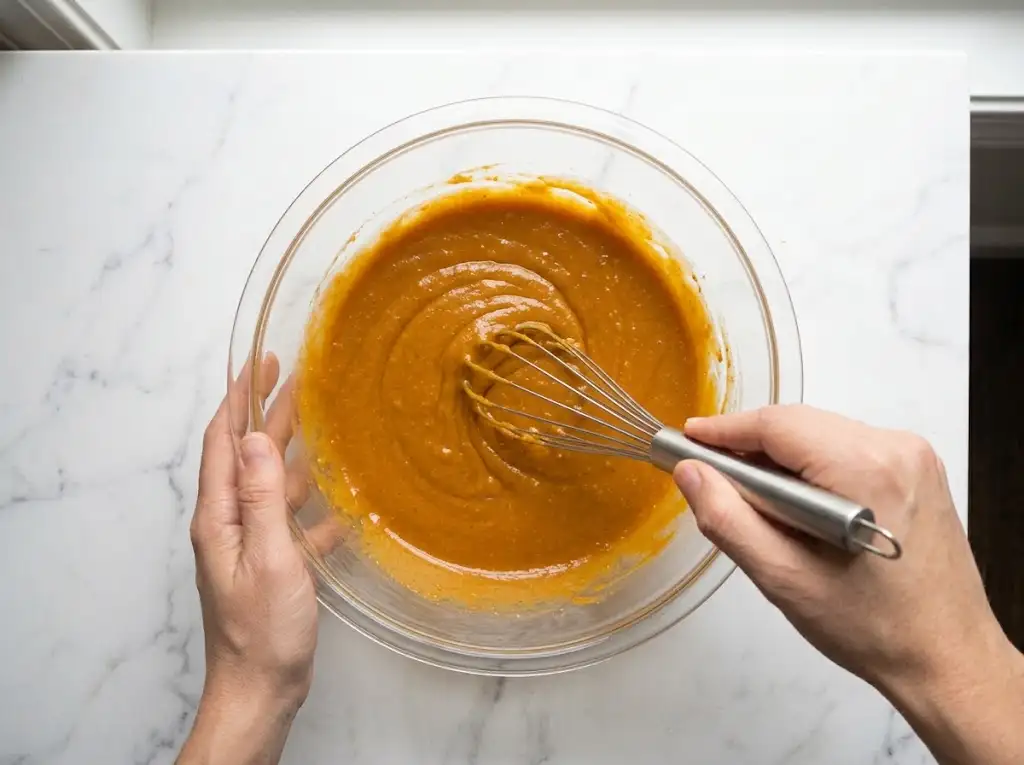
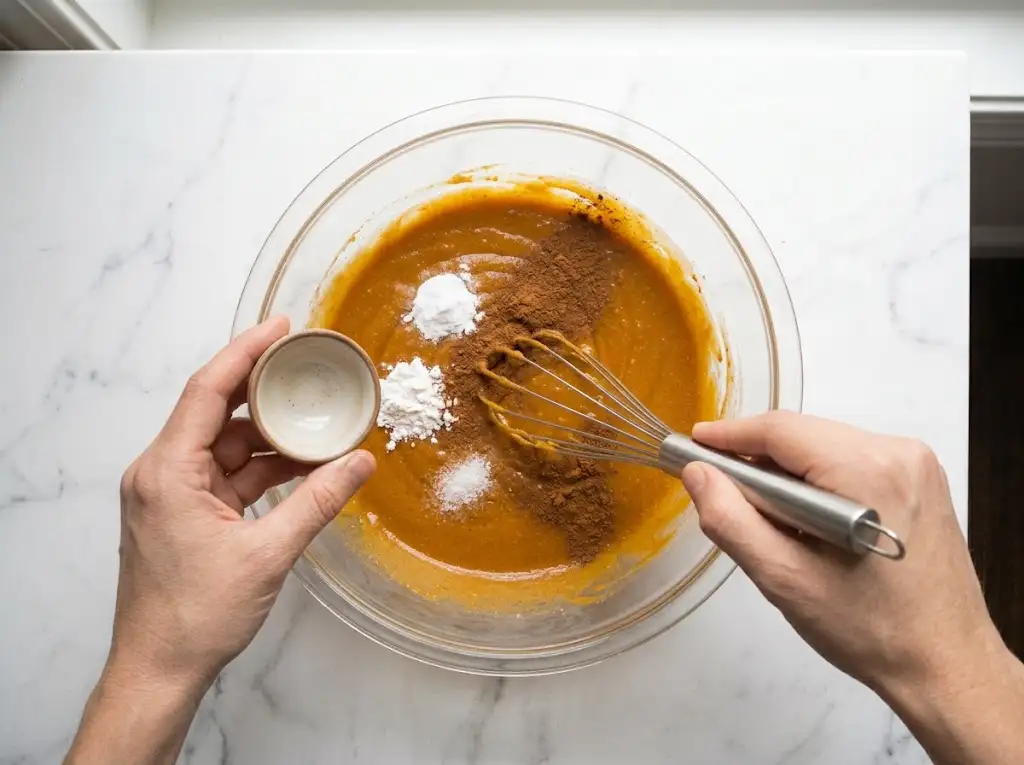
Step 4: Sprinkle the baking soda, baking powder, salt, and spices directly over the wet mixture, then whisk for about 20 seconds so everything distributes evenly before the flour goes in. You’ll notice the batter turns fragrant almost immediately once the cinnamon hits.
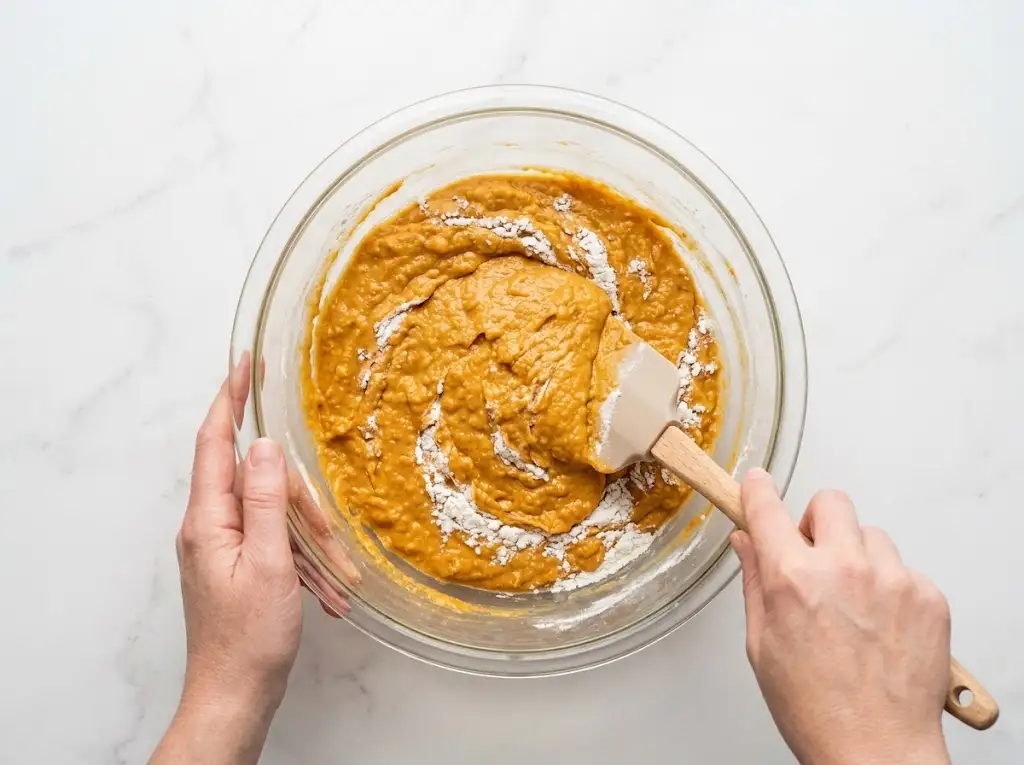
Step 5: Add the flour and switch to a spatula. Fold gently from the bottom of the bowl up, stopping the moment the last streak of flour disappears. Overmixing here is what leads to a tough, dense loaf, so resist the urge to keep stirring, a few small lumps are perfectly fine. This gentle mixing approach is also recommended for quick breads by Utah State University Extension’s baking guide, which explains how overmixing can develop gluten and create a tough texture.
Step 6: Scrape the batter into your prepared pan and smooth the top lightly. Leave the top quarter to third of the pan empty so the loaf has room to dome and rise without spilling over the sides.
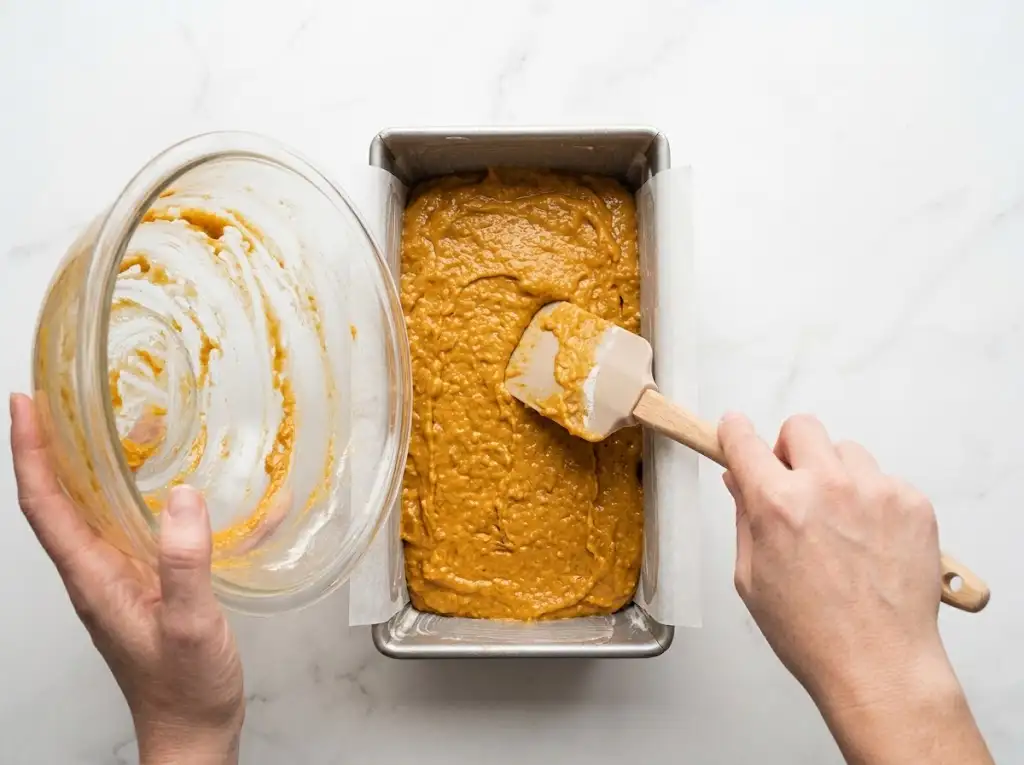
Step 7: Bake for 55 to 65 minutes. Start checking around the 52-minute mark. If the top is browning faster than the center is cooking, loosely tent it with foil starting around the 40-minute point. Your kitchen should start smelling like warm spice and toasted sugar well before the timer goes off.
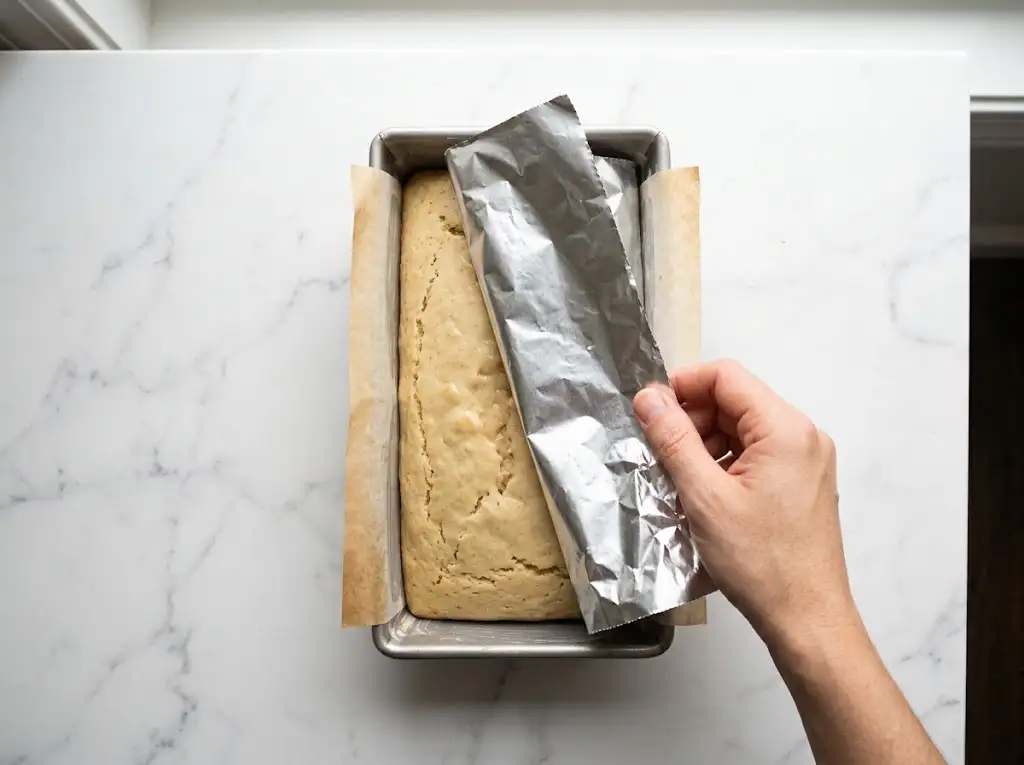
Step 8: Look for a matte, cracked center with a gentle spring when you touch it lightly. A toothpick inserted in the middle should come out with a few moist crumbs clinging to it, not wet batter. If you have a thermometer handy, the deepest part of the center should read 200 to 205°F.
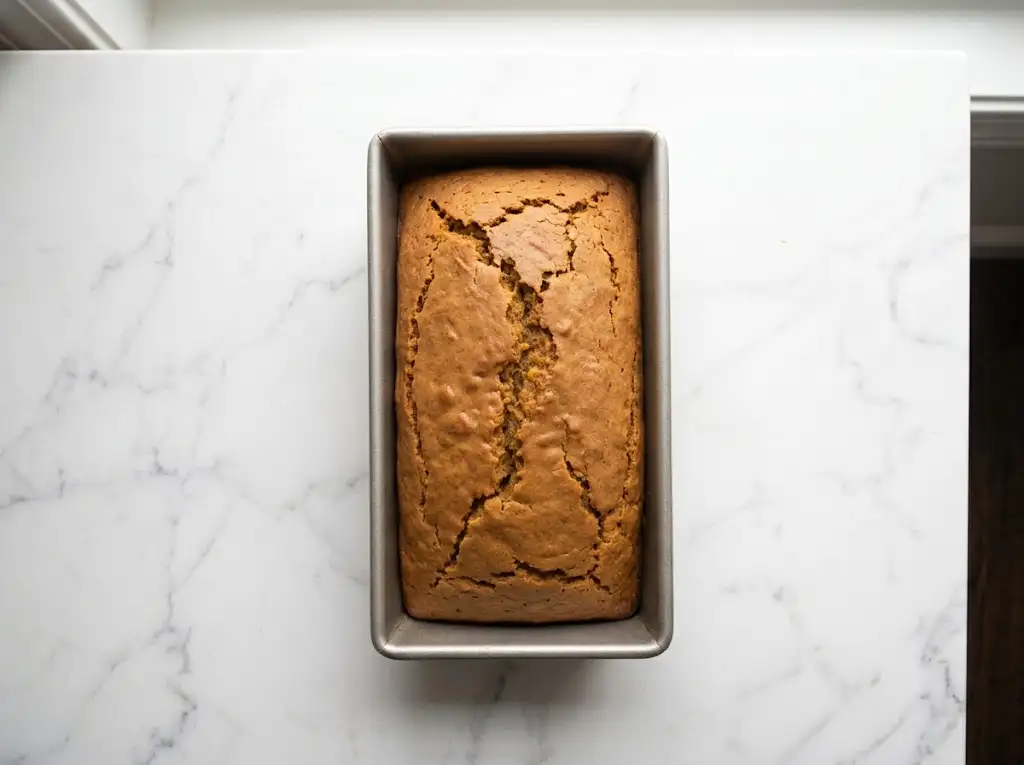
Step 9: Let the loaf cool in the pan for 10 to 15 minutes, then lift it out using the parchment overhang and let it cool completely on a rack for at least 90 minutes before slicing. I know this is the hardest part, especially with that smell filling the room, but cutting in too early is one of the biggest reasons people think their loaf is undercooked when it’s really just still setting.
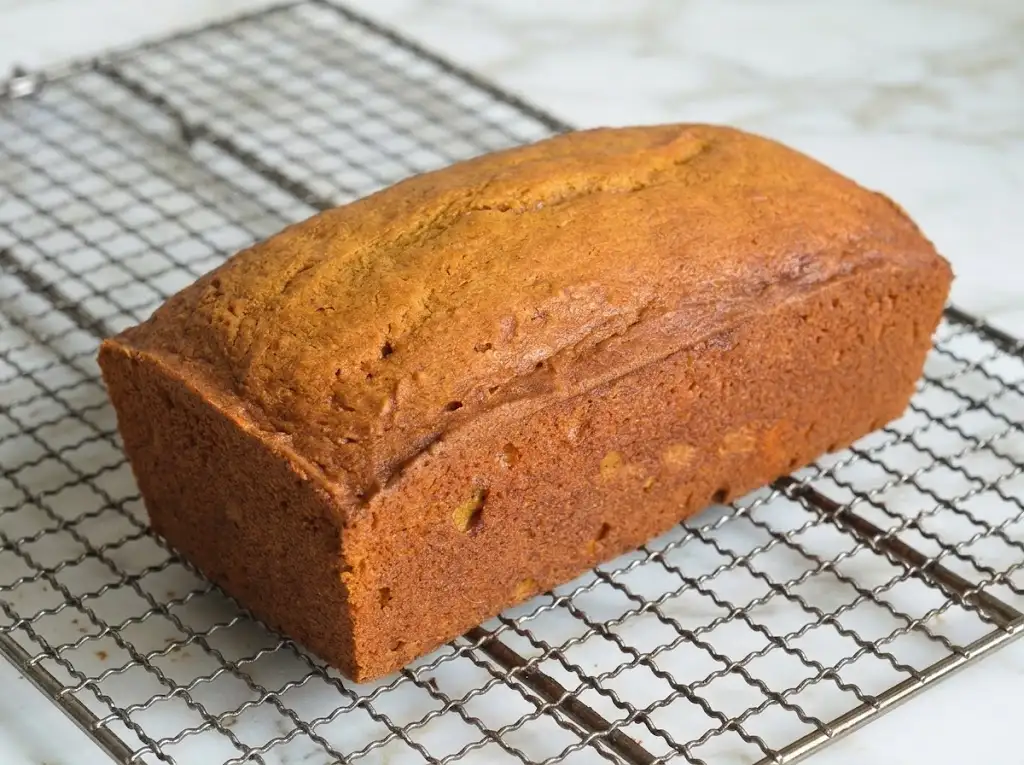
Tips for a Perfectly Moist Loaf Every Time
- Weigh your pumpkin and flour if you can. Scooping flour straight from the bag or using extra-watery puree are the two most common reasons for that gummy stripe near the bottom of the loaf.
- Don’t rush the cooling. Slicing into a hot loaf traps steam inside and can make a fully-baked bread seem gummy when it’s really just not set yet. Give it the full 90 minutes; your patience pays off in cleaner slices.
- Let the visual cues guide you, not just the clock. A cracked, springy center and a toothpick with moist crumbs are more reliable than the timer alone, especially if your pan or oven runs a little differently than what any recipe assumes.
Storing and Freezing Your Pumpkin Bread
This loaf keeps well at room temperature for about 3 to 4 days when wrapped tightly or stored in an airtight container. For broader food-storage guidance, FoodSafety.gov’s cold food storage chart is a useful official reference, and its leftover guidance recommends refrigerating perishable foods within two hours. In a humid kitchen, a layer of paper towel under the wrap can help absorb extra moisture and keep the crust from turning soft. It also freezes beautifully for up to 3 months, just wrap the whole loaf or individual slices tightly in plastic and foil, then thaw at room temperature or warm slices briefly in a toaster oven for that just-baked texture again.
Easy Variations to Try
Once you’ve made the base recipe a couple of times, it’s easy to riff on it. Fold in a handful of chocolate chips, toasted walnuts, or dried cranberries right before pouring the batter into the pan for a bit of texture in every bite. This same batter also works well in mini loaf pans or muffin tins, just start checking for doneness closer to 20 to 25 minutes for muffins, since they bake through much faster than a full loaf. For another pumpkin dessert with a creamy finish, try these pumpkin cookies with cream cheese frosting.
Recipe FAQs
Can I use pumpkin pie filling instead of pumpkin puree?
No, and this is an easy mix-up at the store since the cans look nearly identical. Pumpkin pie filling already has sugar and spices added to it, which throws off both the sweetness and the texture of this recipe. Look for a can labeled “100% pumpkin” or “pumpkin puree” instead.
Why is my pumpkin bread gummy in the middle?
This almost always comes down to one of three things: pumpkin puree that’s too watery, flour that was measured too heavy, or a loaf that was sliced before it finished cooling. Weighing your ingredients and letting the bread rest for a full 90 minutes after baking solves this in most cases.
Can I make this pumpkin bread gluten-free or dairy-free?
Yes to both. It’s naturally dairy-free since it’s made with oil instead of butter. For gluten-free, swap in a 1:1 gluten-free flour blend that already contains xanthan gum, and the texture holds up just as well as the original.
How long does pumpkin bread last, and can I freeze it?
Stored airtight at room temperature, it stays good for 3 to 4 days. If you want to keep it longer, wrap it tightly and freeze it for up to 3 months, then thaw at room temperature whenever you’re ready for a slice.
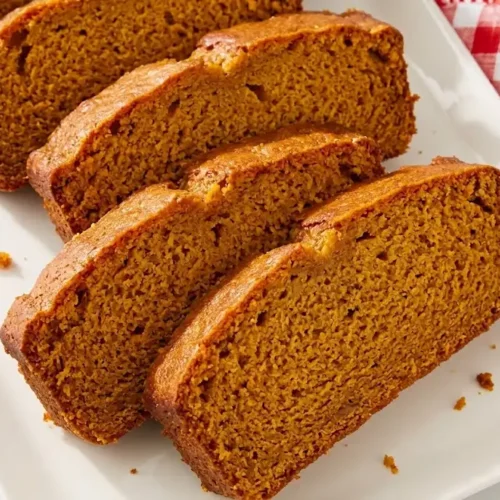
Easy Moist Pumpkin Bread Recipe

Equipment
- 9×5-inch light metal loaf pan
- Instant-read thermometer
- Kitchen scale
- Large Mixing Bowl
Ingredients
- 1¾ cups 220 g all-purpose flour
- 1 teaspoon baking soda
- ½ teaspoon baking powder
- ¾ teaspoon fine salt
- 2 teaspoons ground cinnamon
- ½ teaspoon ground ginger
- ¼ teaspoon ground nutmeg
- ⅛ teaspoon ground cloves
- 2 large eggs room temperature
- ¾ cup 150 g packed light brown sugar
- ¼ cup 50 g granulated sugar
- 1½ cups 340 g plain pumpkin puree
- ½ cup 120 ml neutral oil
- 2 teaspoons vanilla extract
Instructions
- Preheat the oven to 350°F. Grease a 9×5-inch loaf pan and line it with parchment paper. Use 325°F if using a glass pan.
- Whisk the eggs, brown sugar, and granulated sugar in a large bowl until smooth and slightly lighter in color.
- Whisk in the pumpkin puree, neutral oil, and vanilla extract until evenly blended with no oily streaks.
- Whisk in the baking soda, baking powder, salt, cinnamon, ginger, nutmeg, and cloves for about 20 seconds.
- Fold in the flour with a flexible spatula until the last streak of flour disappears. Do not overmix.
- Transfer the batter to the prepared pan and smooth the top. Leave the top quarter to one-third of the pan empty.
- Bake for 55-65 minutes, checking at 52 minutes. Loosely tent the loaf with foil around 40 minutes if the top browns too quickly.
- Check the center for a matte crack and gentle spring. Insert a toothpick into the center; it should come out with moist crumbs, not wet batter. Confirm an internal temperature of 200-205°F if using a thermometer.
- Cool the loaf in the pan for 10-15 minutes.
- Transfer the loaf to a cooling rack and cool completely for at least 90 minutes before slicing.
Notes


Elise Foster
Elise Foster is a contributing writer and recipe creator at MixoRecipes. She develops approachable, well-tested recipes designed to make everyday cooking simple, reliable, and enjoyable.
VIEW ALL RECIPES