
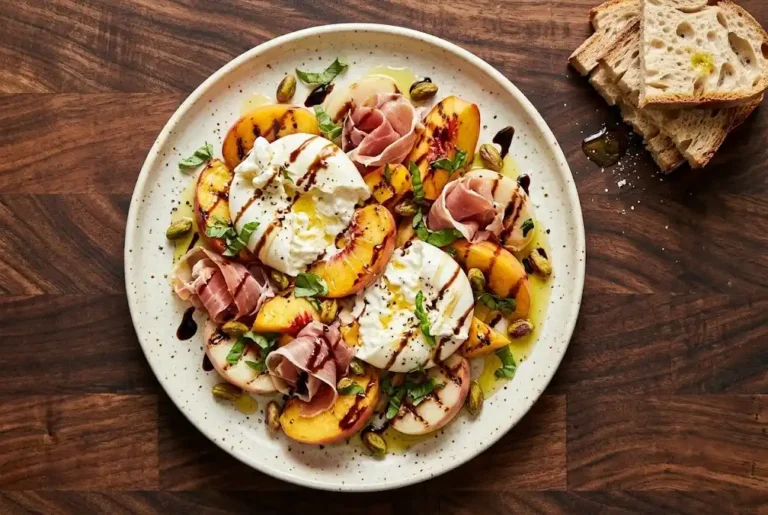
There are recipes that look impressive and recipes that taste impressive—much like a vibrant pesto pasta salad, this peaches and burrata salad does both, and it takes under 15 minutes to pull together. I’ve been making some version of this salad every summer for years, and the moment I started using ripe, fragrant stone fruit alongside creamy burrata, a drizzle of good honey, and fresh basil, it became the dish everyone asks me for first.
It’s the kind of plate you set down on a table and watch disappear. Whether you’re building a light lunch, a dinner party starter, or something beautiful to bring to a gathering, this peach burrata salad earns its place every single time.
Table of Contents
Why You’ll Love This Recipe
- Ready in under 15 minutes — no cooking required, just smart assembly.
- No special skills needed — if you can slice a peach and tear burrata, you’ve got this.
- Endlessly adaptable — works as a starter, a side dish, or a light main with good bread.
- Peak-summer flavors — ripe peaches, creamy fresh cheese, honey, and basil are a combination that genuinely cannot be improved upon.
- Stunning presentation — looks like it came from a high-end restaurant with minimal effort on your part.
What Kind of Peaches Are Best for a Burrata Salad?
The single most important variable in this salad is the quality of your peaches. You want them ripe but not mushy—they should yield slightly when pressed at the stem end and smell fragrant and floral even before you cut into them (here is a fantastic guide on how to tell if a peach is truly ripe). Freestone peach varieties (where the pit pulls away cleanly) are the easiest to slice neatly. Yellow peaches bring a classic sweet-tart intensity, while white peaches offer a milder, more delicate flavor that pairs beautifully with the rich burrata.
Avoid refrigerating peaches before serving—cold dulls their aroma and firms the texture unpleasantly. If your peaches aren’t quite ripe, leave them on the counter for a day or two. For peak season results, nothing beats a farmers’ market find. Out of season, high-quality canned peaches in natural juice (drained and patted dry) make a surprisingly workable substitute. Tip: If you have extra canned peaches left over, you can easily repurpose them into a comforting canned peach cobbler!
What Does Burrata Actually Taste Like, and Is It Different from Mozzarella?
Burrata is fresh mozzarella’s richer, more indulgent cousin. The outer shell is firm mozzarella, but the center is filled with stracciatella—a mixture of soft curd and fresh cream that spills out when you cut into it. If you want a deeper dive into its culinary history and makeup, this comprehensive overview of what burrata is offers great insight. The flavor is mild, milky, and buttery, with a clean dairy freshness that acts as a perfect counterpoint to the sweet acidity of ripe peaches.
Fresh mozzarella is a reasonable substitute if you can’t find burrata, but it won’t give you that lush, creamy interior that makes this salad so striking. When buying burrata, look for it in the refrigerated section of Italian delis or well-stocked supermarkets. It should be used the same day or within 24 hours of opening for the best texture and flavor.
How Do You Dress a Peach and Burrata Salad Without Overpowering It?
The dressing here should enhance, not compete. A heavy vinaigrette would overwhelm the delicate flavors at play, so the goal is restraint with layers: a drizzle of extra-virgin olive oil, a touch of good honey, a small splash of balsamic glaze for depth and acidity, and flaky sea salt to sharpen everything. That’s it. The magic is in the quality of each component, not the complexity.
Some cooks add a squeeze of fresh lemon juice for brightness, which works especially well with white peaches. If you want a subtle heat note, a pinch of crushed red pepper flakes scattered over the top adds a gentle warmth that plays beautifully against the sweetness of the fruit. Dress the salad just before serving—peaches release juice quickly, and you don’t want the greens to wilt.
Can You Add Greens or Protein to Make It a Full Meal?
Absolutely, and it’s one of the best ways to turn this into a satisfying lunch. Peppery arugula is the classic choice—its bitter bite creates a perfect tension with the sweet peaches and rich burrata. Baby spinach or watercress also work well. Spread the greens as a loose base, arrange the peaches and burrata over the top, and dress everything together.
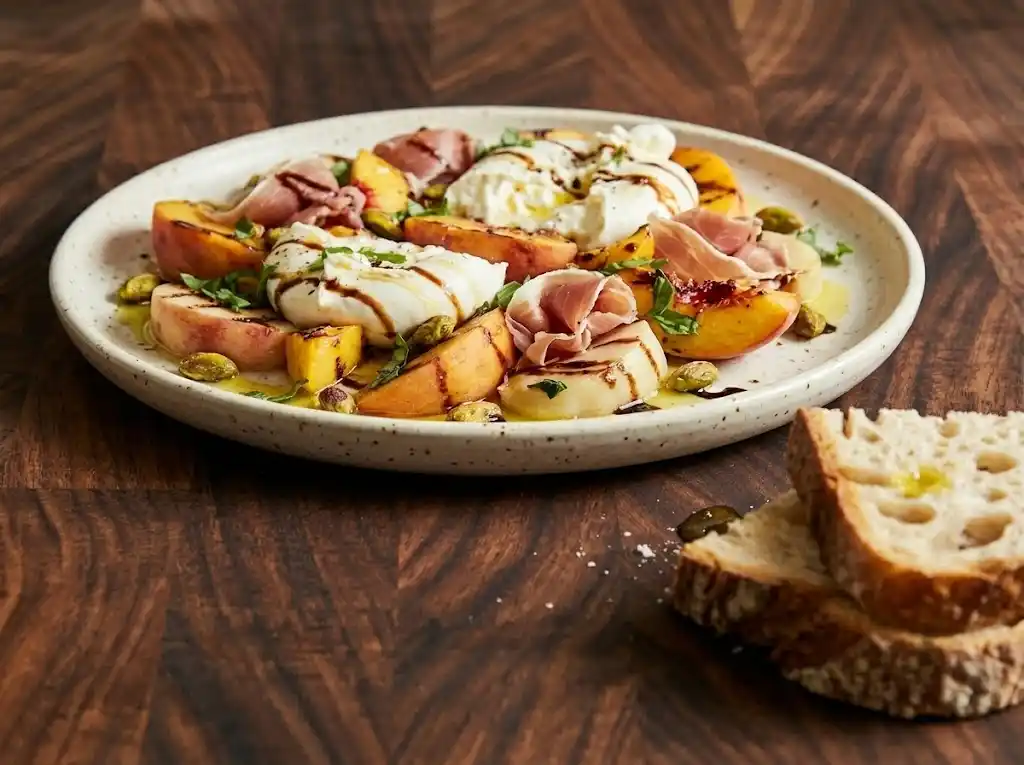
For protein, thinly sliced grilled chicken breast, some quick grilled shrimp skewers, or sliced halal beef prosciutto-style cured meat adds substance without muddying the flavors. Toasted walnuts or pistachios bring crunch and another layer of richness. A handful of microgreens or fresh mint alongside the basil lifts the whole plate with an herbal freshness that keeps every bite interesting.
Peaches and Burrata Salad: Key Ingredients
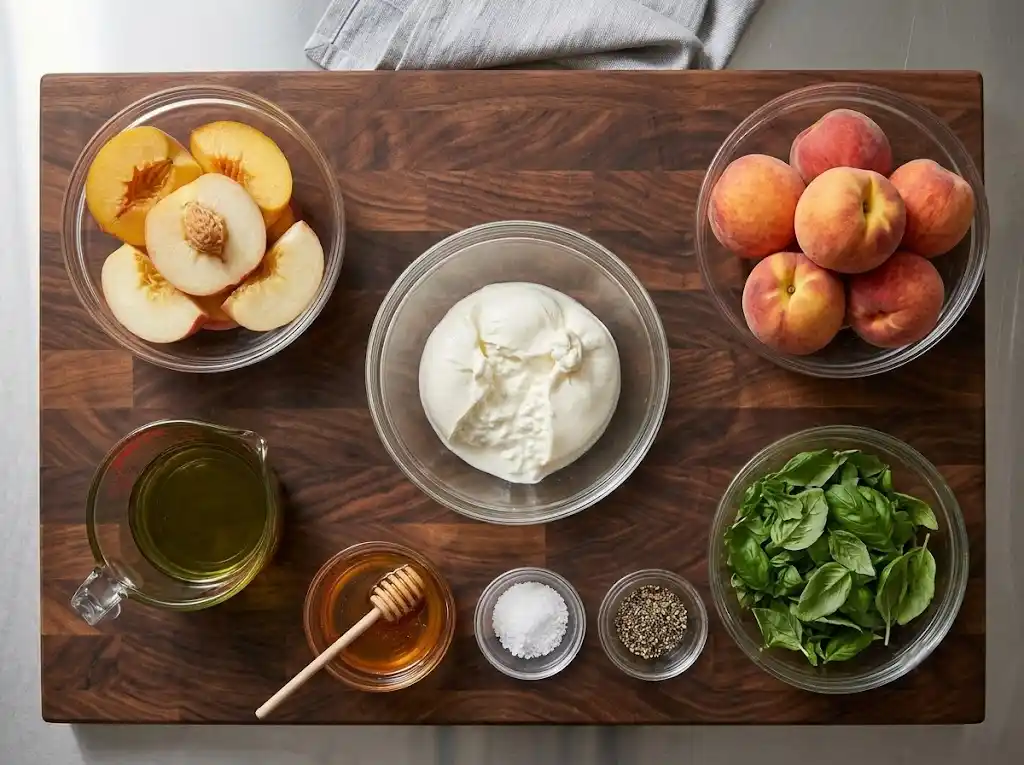
Ripe Yellow or White Peaches — These are the heart of the dish. Their natural sugars, balanced by a gentle tartness, create the sweet-savory tension that makes this salad sing. Don’t compromise here; an underripe peach is starchy and flat.
Fresh Burrata — The creamy interior is what separates this salad from a basic fruit-and-cheese plate. As the burrata sits and is broken apart, its center mingles with the dressing and peach juices to create a loose, luscious sauce that coats everything on the plate.
Raw Honey — A thin drizzle over the top amplifies the peach’s natural sweetness and adds a floral note that ties the whole dish together. Use a good-quality wildflower or acacia honey; the flavor genuinely matters at this small quantity.
Fresh Basil and Extra-Virgin Olive Oil — These are the finishing touches that make the salad feel complete. Tear the basil rather than chopping it to release its oils without bruising. A grassy, peppery olive oil adds richness and rounds out the acidity of the balsamic glaze.
How To Make peaches and burrata salad Step By Step
STEP 1 — Prepare the peaches
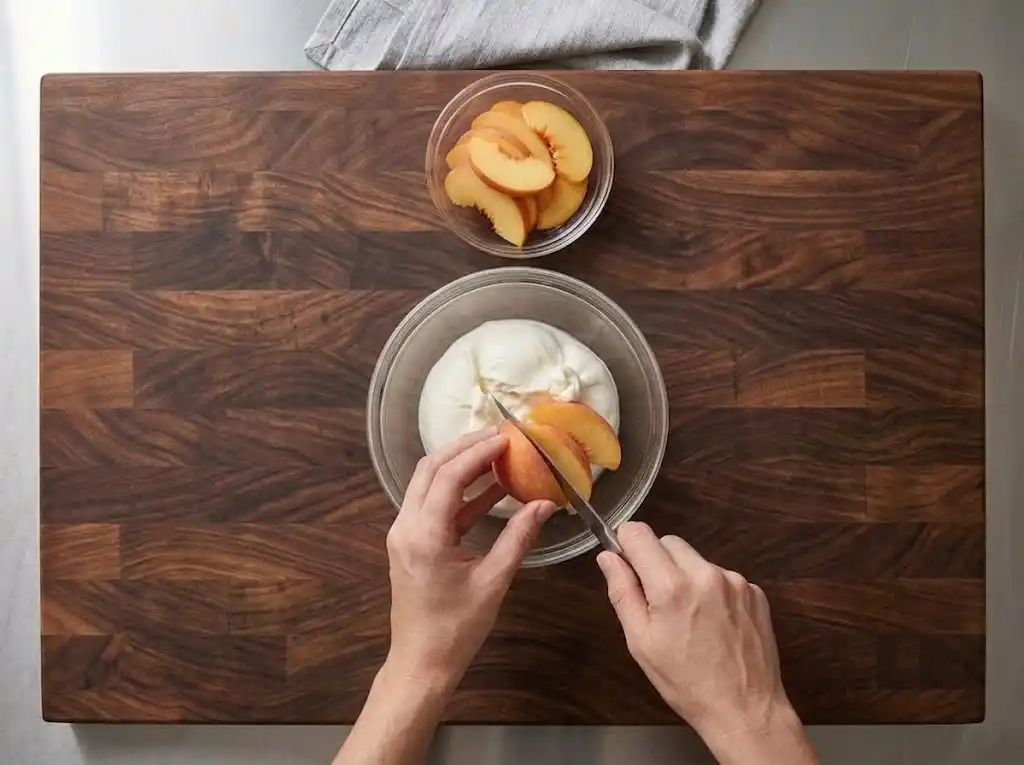
Wash and dry the peaches, then halve them and remove the pits. Slice each half into 4 to 5 wedges—thick enough to hold their shape but thin enough to fan out elegantly on the plate. If the skin bothers you, a brief 30-second blanch in boiling water followed by an ice bath slips it right off, but for most ripe peaches, the skin is thin enough to leave on.
STEP 2 — Build the base
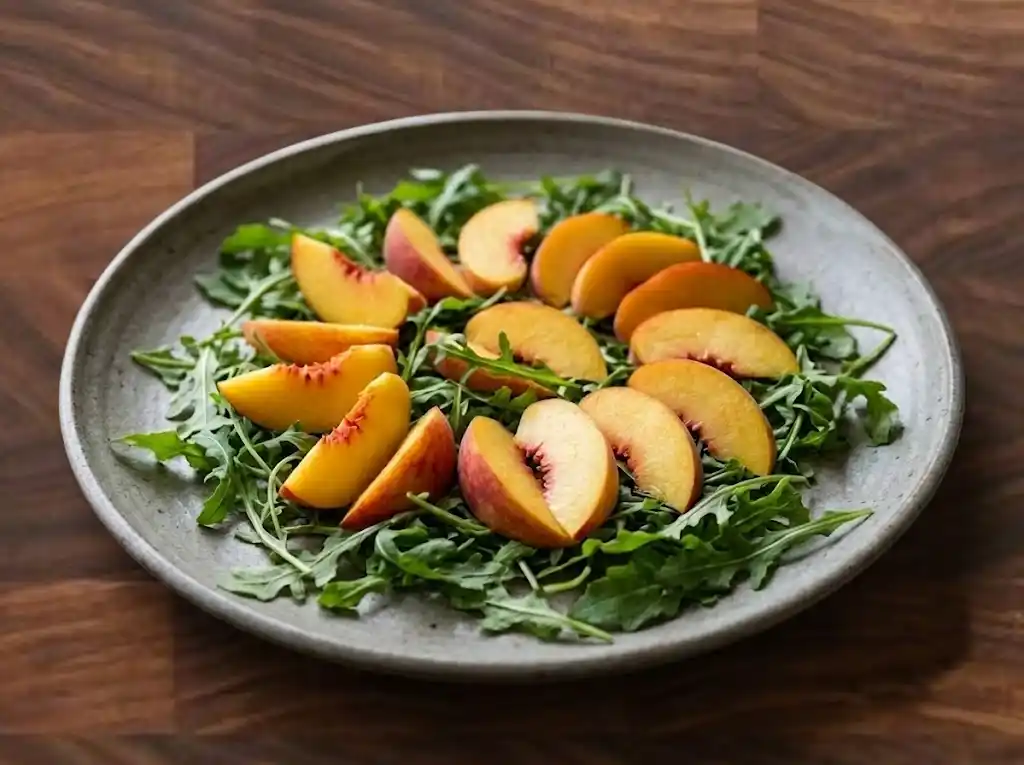
If using greens, scatter a loose handful of arugula across a wide, shallow serving plate or board. Arrange the peach slices over the greens in a relaxed, overlapping pattern—don’t be too precious about it. The beauty of this salad is its natural, organic look.
STEP 3 — Add the burrata
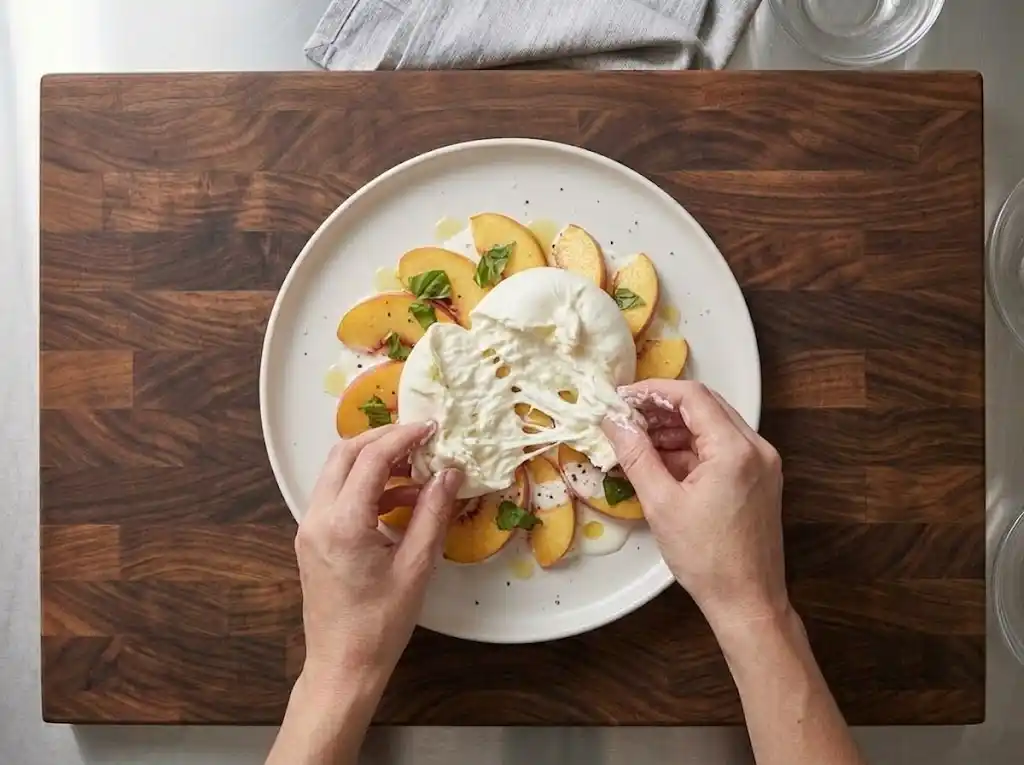
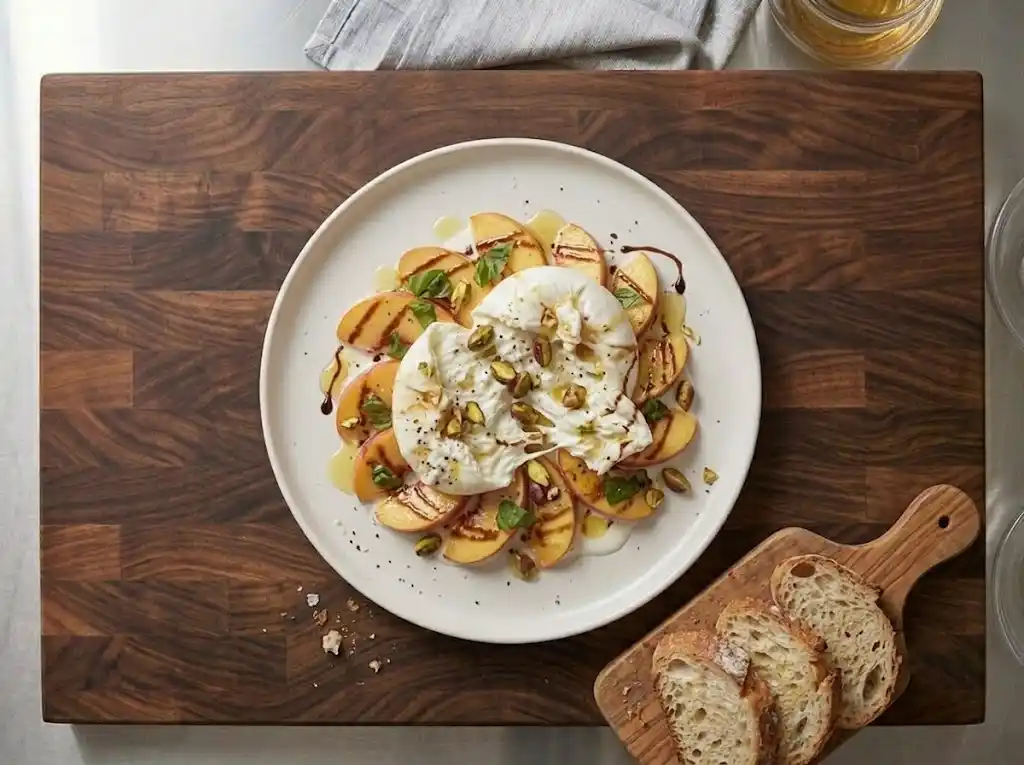
Tear or place the burrata in the center or in two or three spots across the plate. Don’t slice it cleanly; pull it apart slightly so the creamy interior starts to spill out and integrate with the peaches. This is the moment the salad becomes something genuinely special—the cream mingles with the peach juice and dressing into something irresistible.
STEP 4 — Dress and finish
Drizzle generously with extra-virgin olive oil, then the honey, then a light zigzag of balsamic glaze. Season with flaky sea salt and a few cracks of black pepper. Scatter fresh basil leaves and, if using, toasted pistachios or walnuts over the top. Serve immediately with crusty bread to mop up every drop of the dressing that pools at the bottom of the plate.
Pro Substitutions for Every Dietary Need
No burrata? Fresh mozzarella (fiore di latte) is the closest substitute. For a dairy-free version, a thick cashew cream or chilled whipped coconut cream mimics the richness surprisingly well—season it with a pinch of salt.
No fresh peaches? Nectarines are a 1:1 swap with very similar flavor. Ripe mangoes bring a tropical spin. As mentioned, quality canned peaches in natural juice—drained and dried on paper towels—work in a pinch, especially off-season.
No balsamic glaze? A splash of pomegranate molasses gives a similar sweet-tart depth with a beautiful ruby color. Fresh lemon juice with a tiny pinch of sugar is a lighter, brighter option.
Want more substance? Serve over a thick slice of grilled sourdough bread rubbed with garlic, or pair it with another fresh favorite like a cucumber cottage cheese sandwich for a full spread. The bread soaks up all the honey, olive oil, and peach juices and becomes something extraordinary.
Nut-free? Skip the pistachios and use toasted pumpkin seeds (pepitas) for crunch—they add a subtle earthiness without any allergen concerns.
Recipe FAQs
Can I make this salad ahead of time?
This salad is best assembled and served immediately—peaches release juice quickly and the burrata is at its best the moment it’s opened. You can prep your ingredients (slice the peaches, wash the greens, mix the dressing) up to an hour ahead and refrigerate them separately, then assemble right before serving.
My peaches are a little underripe. What should I do?
Leave them at room temperature for 1–2 days in a single layer. You can speed the process slightly by placing them in a paper bag with an apple or banana, which releases ethylene gas and encourages ripening. Never put unripe peaches in the fridge—the cold stops the ripening process completely.
Where can I find burrata?
Most well-stocked grocery stores now carry it in the specialty cheese section. Italian delis, whole food markets, and international supermarkets are reliable sources. It’s typically sold in small tubs of water or whey. If your local store doesn’t carry it, fresh mozzarella from the same refrigerated section is your best backup.
Peaches and Burrata Salad

Equipment
- Large shallow serving plate or board
- Sharp chef’s knife
- Cutting board
- Small bowl for dressing
Ingredients
- 3 ripe medium peaches yellow or white, pitted and sliced into wedges
- 2 balls of fresh burrata approximately 4 oz / 125g each
- 2 cups baby arugula
- 3 tablespoons extra-virgin olive oil
- 1 tablespoon raw honey
- 1 tablespoon balsamic glaze
- ¼ cup fresh basil leaves torn
- 3 tablespoons toasted pistachios roughly chopped
- ½ teaspoon flaky sea salt
- ¼ teaspoon freshly cracked black pepper
Instructions
- Wash and dry the peaches thoroughly, then halve each one and remove the pit. Slice each half into 4 to 5 even wedges. If you prefer to remove the skin, score the base of each peach with a shallow X, blanch in boiling water for 30 seconds, then transfer immediately to an ice bath—the skin will slip off cleanly.
- Scatter the baby arugula in a loose, relaxed layer across a wide, shallow serving plate. You’re not packing it down; the greens should feel effortless and airy.
- Arrange the peach slices over the arugula in an overlapping, slightly fanned pattern, distributing them evenly across the plate for a natural, beautiful presentation.
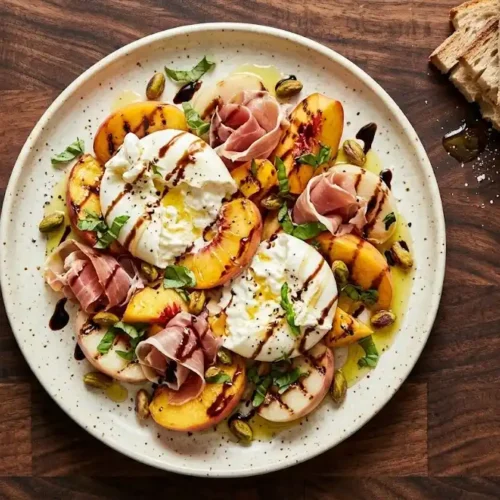
- Tear the burrata apart gently and place pieces across the salad in 2 to 3 spots. Pull the edges apart slightly so the creamy interior begins to spill out and mingle with the peaches—this creates the luscious, self-saucing quality that makes this salad exceptional.
- Drizzle the extra-virgin olive oil evenly over everything, followed by the honey, then a light zigzag of balsamic glaze. The dressing should be present but not pooling heavily—you want each component to retain its character.
- Season the entire plate with flaky sea salt and cracked black pepper. Scatter the torn fresh basil leaves and the toasted pistachios over the top. Serve immediately with thick slices of crusty bread.
Notes

Isabella Rossi
Isabella Rossi is a chef and culinary director with over 20 years of experience in European kitchens. She reviews and approves every recipe to ensure accuracy, balance, and reliable results for home cooks.
VIEW ALL RECIPES