

That bright, citrusy slice wrapped in a thick white glaze sitting next to the register at Starbucks? You can make it at home — and honestly, it comes out better. This Starbucks Lemon Loaf Recipe is a moist, bakery-style lemon pound cake with a tender crumb, bold real-lemon flavor, and a sweet lemon glaze that sets into a beautiful, slightly crisp shell.
Whether you’re craving that coffee-shop treat on a Tuesday morning (perfectly paired with our Better Than Starbucks Egg Bites Copycat) or baking it for a weekend brunch, this copycat nails every detail: the density, the citrus punch, and that iconic thick glaze — all for a fraction of the price. No preservatives, no mystery ingredients — just real lemon, pantry staples, and a result that will make you never buy it again.
Table of Contents
Why You’ll Love This Recipe
- Tastes exactly like Starbucks — only better. Using real lemon zest, fresh juice, and lemon extract together creates a layered, true lemon flavor that the Starbucks version can only dream of.
- Super moist crumb, every single time. The combination of sour cream and a butter-oil blend keeps this loaf incredibly tender without it being dense or heavy.
- One bowl, beginner-friendly method. No stand mixer required. No complicated techniques. If you can whisk, you can make this loaf.
- Thick, bakery-style lemon glaze. Not a thin drizzle — a real, opaque, lemon-forward glaze that sets beautifully and makes every slice look stunning.
- Budget-smart and make-ahead friendly. A full homemade loaf costs under $6 vs. $4–5+ for a single slice at Starbucks. And it freezes perfectly.
Essential Equipment for Baking This Starbucks Lemon Loaf
- 9×5-inch loaf pan: The standard size that gives you the same tall, rectangular shape as the Starbucks original. Avoid 8×4 pans — the batter will overflow.
- Microplane or fine zester: Extracts the fragrant, oil-rich zest without scraping the bitter white pith underneath, which is everything for lemon flavor.
- Two mixing bowls (one large, one medium): Keeping wet and dry ingredients separate until the last moment prevents overmixing and a tough crumb.
- Whisk and rubber spatula: The whisk aerates your wet ingredients; the spatula lets you fold the batter gently, protecting the texture.
- Wire cooling rack: Essential for letting air circulate under the loaf so the bottom doesn’t go soggy before you glaze it.
- Parchment paper: Lines the pan so the loaf releases cleanly and you get that smooth, photo-worthy exterior.
Starbucks Lemon Loaf Recipe Ingredients

For the Lemon Loaf
- 1½ cups (190g) all-purpose flour — The structural backbone. Spoon and level it into your cup; packing flour is the #1 cause of a dense, dry loaf. For the best accuracy, check out King Arthur Baking’s guide on measuring flour.
- 1 teaspoon baking powder — Provides the main lift, giving you a tall, domed top just like Starbucks.
- ¼ teaspoon baking soda — Works with the acidic sour cream to create a fine, even crumb and a slight golden color.
- ¼ teaspoon fine salt — Balances the sweetness and brightens the lemon flavor. Don’t skip it.
- 3 large eggs, room temperature — Room-temperature eggs emulsify into the batter smoothly. Cold eggs can cause the batter to look curdled and result in a rubbery loaf.
- 1 cup (200g) granulated sugar — Sweetens and helps create a moist, slightly dense crumb characteristic of pound cake.
- ¾ cup (180g) full-fat sour cream, room temperature — The secret weapon. Its fat and acid keep the crumb tender and moist for days. Greek yogurt works too, but full-fat sour cream is closer to Starbucks.
- 2 tablespoons unsalted butter, melted and slightly cooled — Adds richness and that buttery flavor.
- ½ cup (120ml) neutral oil (vegetable or canola) — Oil stays liquid at room temperature, which is why oil-based cakes stay moist even the next day, unlike butter-only loaves.
- Zest of 2 large lemons (about 2 tablespoons) — The zest holds the lemon’s essential oils — the most fragrant, truest lemon flavor you can get. This is non-negotiable. If you love savory lemon dishes too, don’t miss our crispy lemon garlic chicken thighs.
- 3 tablespoons fresh lemon juice — Adds brightness and acidity. Fresh only; bottled juice tastes flat.
- 1½ teaspoons lemon extract — The key to matching that intense lemon flavor you get at Starbucks. Use a good-quality brand; cheap extract can taste chemical.
- 1 teaspoon pure vanilla extract — Rounds out the flavor and adds warmth so the loaf doesn’t taste one-dimensional.
For the Thick Lemon Glaze
- 1½ cups (180g) powdered sugar, sifted — Sifting prevents lumps. A smooth glaze sets cleanly and looks professional.
- 2–3 tablespoons fresh lemon juice — Start with 2 tablespoons for a thick glaze; add more to thin it out if needed.
- 1 tablespoon whole milk or heavy cream — Adds richness and helps the glaze set opaque (like Starbucks’s) rather than transparent.
- ½ teaspoon lemon extract — Optional, but recommended for a bold glaze that holds its own against the loaf.
How to Make the Starbucks Lemon Loaf (Step-by-Step)
Step 1: Prep Your Pan and Oven
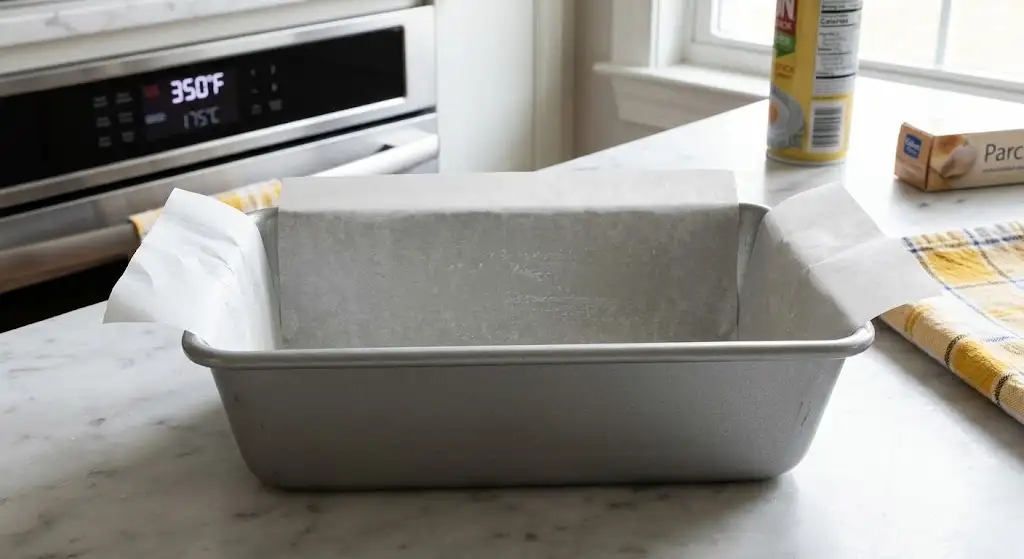
Preheat your oven to 350°F (175°C). Line your 9×5-inch loaf pan with parchment paper, leaving a 1-inch overhang on the long sides — this becomes your “handle” to lift the loaf out cleanly. Lightly spray with non-stick cooking spray, then set aside.
Step 2: Zest Your Sugar
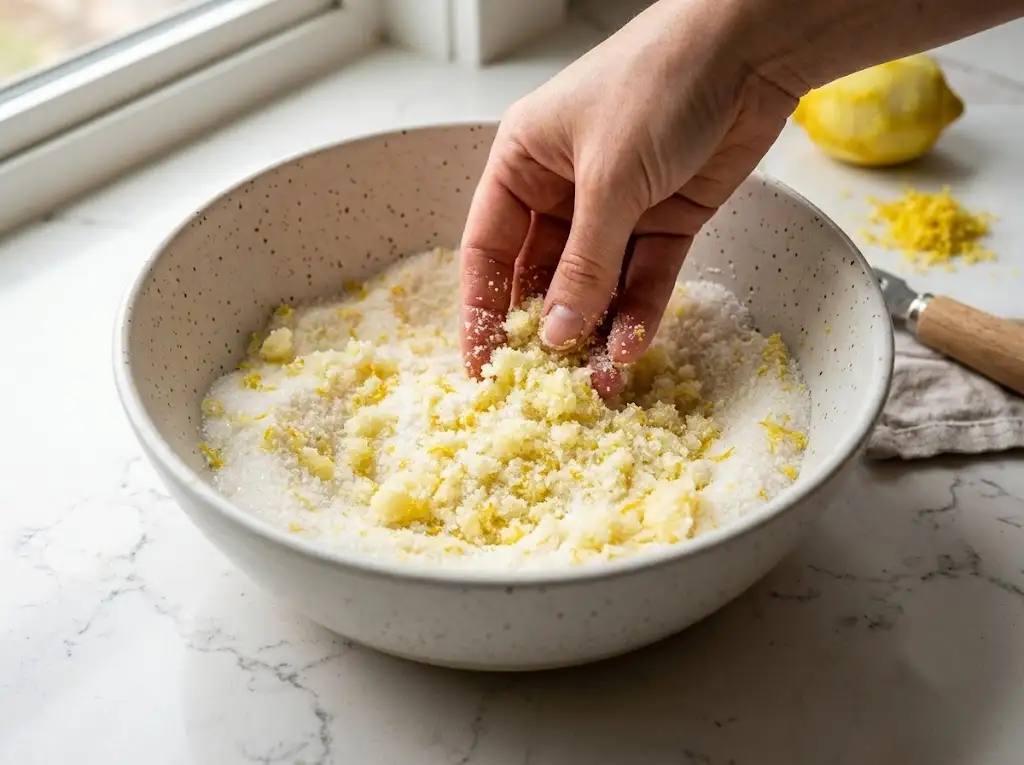
Add the granulated sugar and lemon zest to your large mixing bowl. Rub them together with your fingertips for about 30 seconds. You’ll see the sugar turn pale yellow and smell intensely lemony — that’s the citrus oils releasing directly into the sugar. As Serious Eats notes regarding lemon oil extraction, sugar acts as a powerful abrasive that pulls out all those deep aromatic oils, dispersing flavor through every bite of the loaf. This one small step makes a noticeable difference.
Step 3: Mix the Wet Ingredients
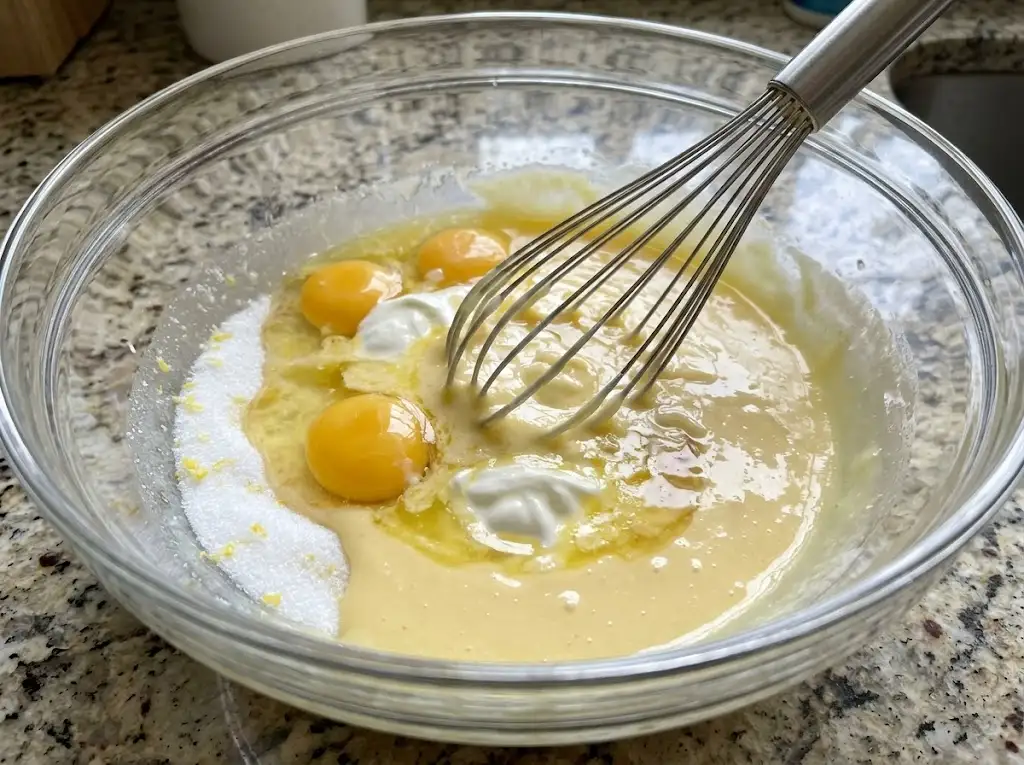
Add the 3 room-temperature eggs to the lemon sugar and whisk vigorously until the mixture is pale and slightly thickened, about 1–2 minutes. Add the sour cream, melted butter, oil, lemon juice, lemon extract, and vanilla extract. Whisk until the batter is smooth, glossy, and uniform — it should look like a thick, creamy lemon curd consistency.
Step 4: Add the Dry Ingredients
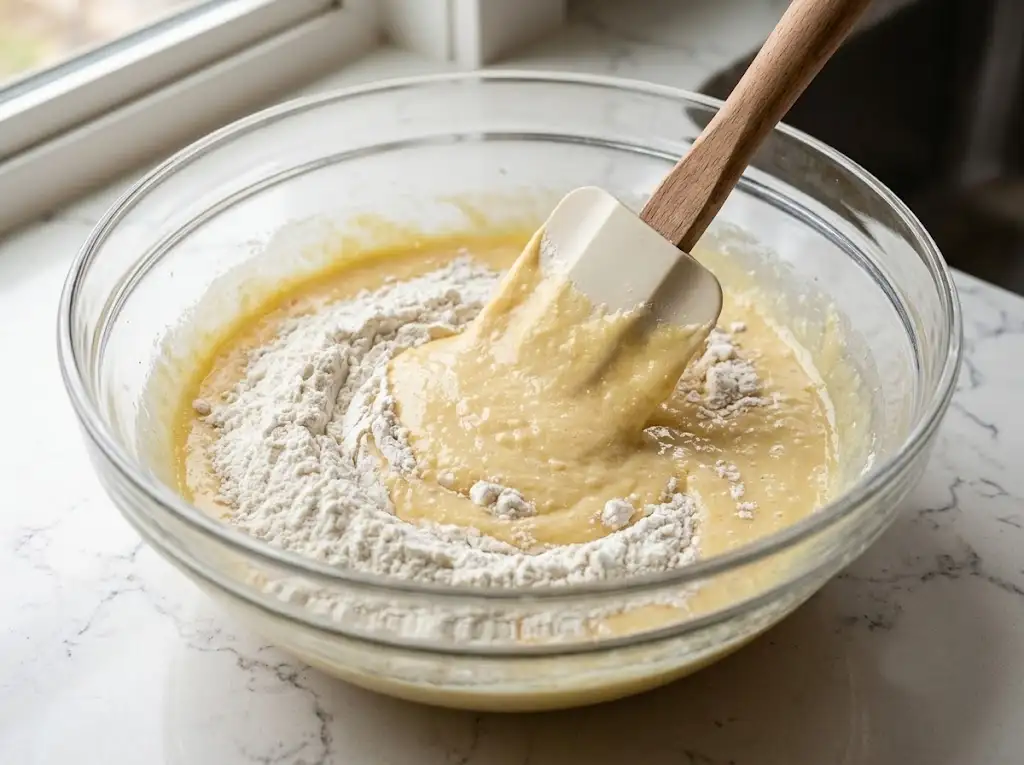
In your second bowl, whisk together the flour, baking powder, baking soda, and salt. Pour the dry ingredients into the wet all at once. Using your rubber spatula, fold gently — large, sweeping strokes from the bottom of the bowl upward. Stop the moment you can no longer see dry flour streaks. A few tiny lumps are fine. Overmixing at this stage activates gluten and turns your loaf rubbery, so resist the urge to keep stirring.
Step 5: Bake
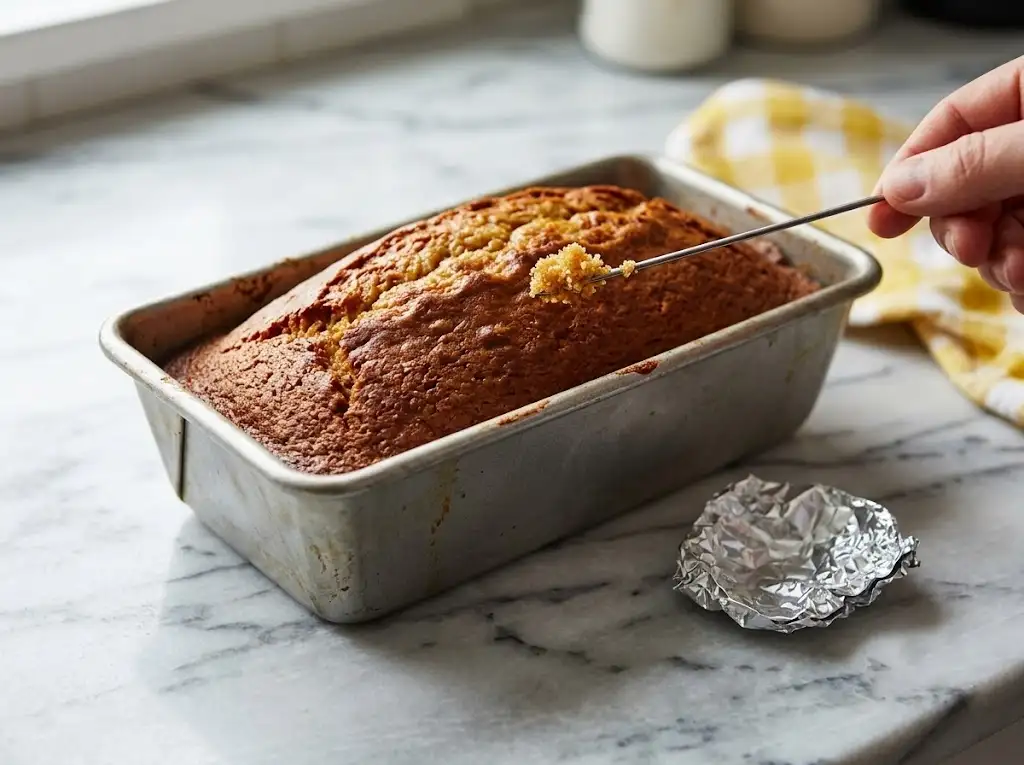
Pour the batter into your prepared loaf pan and smooth the top with your spatula. Give the pan one firm tap on the counter to release any air bubbles. Bake on the center rack for 50–60 minutes, or until the top is deep golden brown and a toothpick inserted in the center comes out with only a few moist crumbs (not wet batter). If the top browns too quickly before the center sets (check at the 35-minute mark), loosely tent the loaf with aluminum foil for the remainder of the bake.
Step 6: Cool Completely
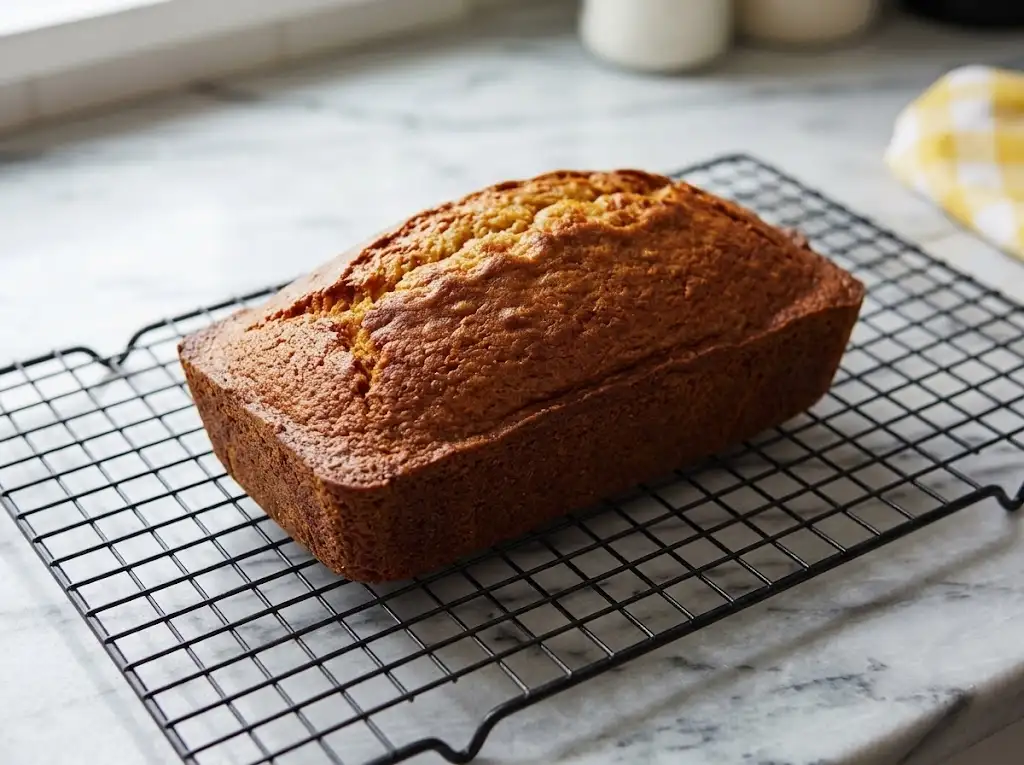
Let the loaf cool in the pan for 15 minutes, then use the parchment overhang to lift it onto your wire cooling rack. Let it cool completely — at least 1 hour, ideally 90 minutes. Glazing a warm loaf means the glaze will run off, soak in, and leave you with a sticky, transparent coating instead of that thick, white Starbucks-style shell. (Want another treat that requires zero oven time? Check out our quick no-bake cheesecake)!
Step 7: Make the Lemon Glaze
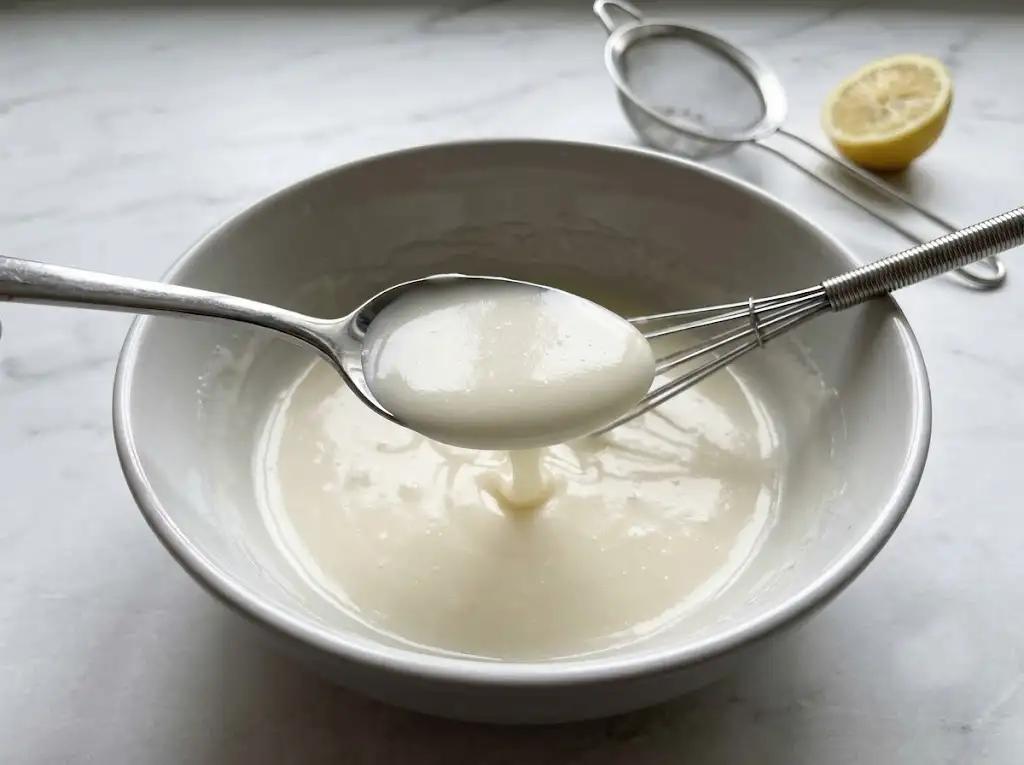
Sift the powdered sugar into a medium bowl. Add 2 tablespoons of lemon juice and 1 tablespoon of milk. Whisk until silky smooth. The glaze should coat the back of a spoon thickly — when you lift the whisk, it should fall in a slow, ribbon-like stream. If it’s too thick, add lemon juice ½ teaspoon at a time. If it’s too thin, add powdered sugar 1 tablespoon at a time. Stir in lemon extract if using.
Step 8: Glaze and Set
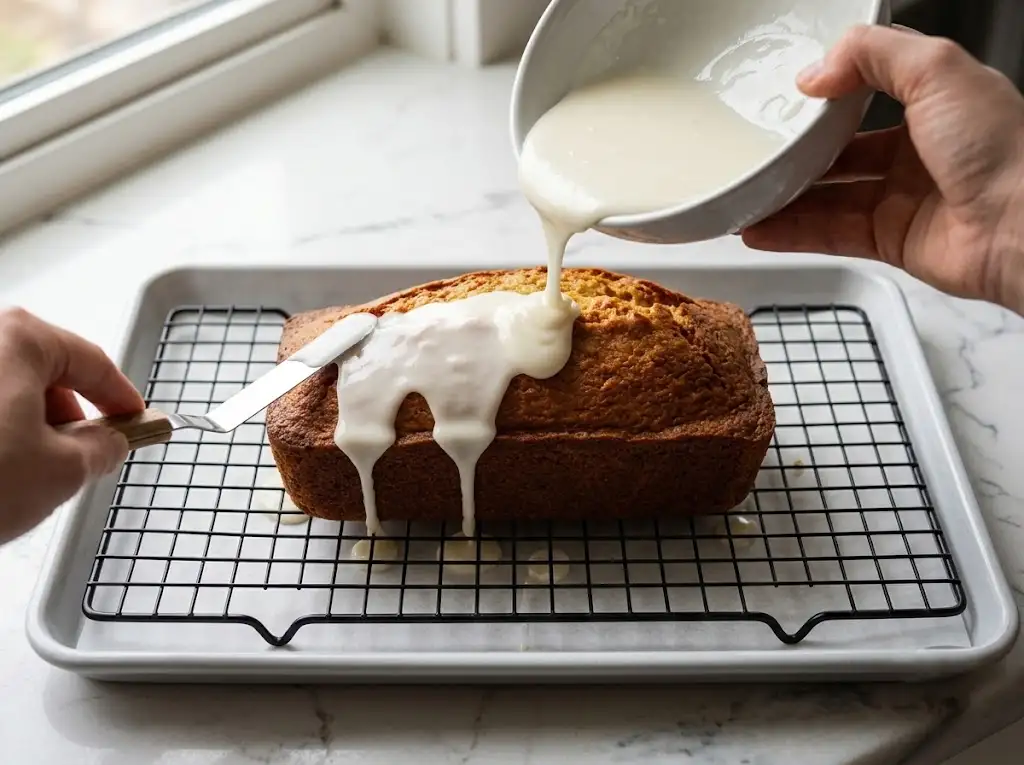
Place your cooled loaf (still on the rack) over a sheet of parchment or a baking tray to catch drips. Pour the glaze slowly down the center of the loaf, then use a spatula to gently coax it over the edges. Let the glaze set at room temperature for at least 20–30 minutes before slicing — this gives you those clean, white-coated slices you see at Starbucks.
Pro Chef Tips for a Perfect Starbucks Lemon Loaf Every Time
- Use the zest and extract together, never just one. Zest alone gives you a subtle, fresh lemon note; extract alone can taste artificial. The combination creates that bold, “lemon-forward but not fake” flavor that defines the Starbucks version. This was the biggest game-changer in my recipe testing.
- Don’t skip rubbing the zest into the sugar. It takes 30 seconds and adds a depth of lemon flavor that simply whisking everything together can’t replicate. The sugar granules act as an abrasive, breaking the zest’s oil cells open.
- Weigh your flour if you can. 190g vs. a packed cup of flour can be the difference between a moist loaf and a dry, crumbly one. If you don’t have a scale, spoon flour into your measuring cup and level it with a straight edge — never scoop directly from the bag.
- The toothpick test isn’t enough — use the tap test too. Gently press the top of the loaf with a fingertip; it should spring back immediately. If it leaves an indent, bake for another 5 minutes and check again. This prevents the underbaked, gummy center that frustrates so many home bakers.
- Avoid this common mistake: opening the oven before the 40-minute mark. The loaf needs consistent heat to rise properly. Opening the door too early causes a rush of cold air that deflates the structure and leads to that dreaded sunken center.
Starbucks Lemon Loaf Recipe FAQs
Can I use Greek yogurt instead of sour cream?
Yes — full-fat plain Greek yogurt is the best substitute, swapped 1:1. It has a similar fat content and acidity, so the texture comes out very close. Avoid low-fat or fat-free versions; they don’t have enough fat to keep the crumb moist, and the loaf turns out noticeably drier.
Why did my lemon loaf sink in the middle?
A sunken center usually comes from one of three causes: the oven door was opened too early, the batter was overmixed (which makes it rise fast then collapse), or there was too much liquid (common if you swapped sour cream for a thinner dairy like milk or liquid yogurt). Make sure your leavening agents are fresh — baking powder older than 6 months loses its lift.
My glaze turned out transparent/runny — how do I fix it?
Add more sifted powdered sugar, 1 tablespoon at a time, whisking after each addition until you reach a thick, opaque, ribbon consistency. The glaze should flow slowly — not pour like water. Also make sure the loaf is completely cool before applying. A warm surface melts the glaze on contact and it soaks in instead of setting on top.
Can I make this into muffins or mini loaves?
Absolutely. For muffins, fill lined muffin cups about ¾ full and bake at 350°F for 18–22 minutes. For mini loaves (using a 3×5-inch pan), bake for 30–40 minutes. Use the same toothpick + tap test for doneness. The glaze recipe stays the same — just drizzle generously over each piece after cooling.
What if I don’t have lemon extract?
Increase the lemon zest to 3 tablespoons (from 3 lemons) and add an extra tablespoon of fresh lemon juice. You won’t get the exact same intensity, but the flavor will still be bright and natural. A lemon emulsion (found in baking supply stores) is an even better substitute than extract — it’s more stable and less likely to taste artificial.

Starbucks Lemon Loaf Recipe (Better-Than-Starbucks Copycat)

Equipment
- 9×5-inch loaf pan
- Microplane or fine zester
- 2 mixing bowls (one large, one medium)
- Whisk
- Rubber spatula
- Wire cooling rack
- – Parchment paper
Ingredients
- 1½ cups 190g all-purpose flour
- 1 teaspoon baking powder
- ¼ teaspoon baking soda
- ¼ teaspoon fine salt
- 3 large eggs room temperature
- 1 cup 200g granulated sugar
- ¾ cup 180g full-fat sour cream, room temperature
- 2 tablespoons unsalted butter melted and slightly cooled
- ½ cup 120ml neutral oil (vegetable or canola)
- Zest of 2 large lemons about 2 tablespoons
- 3 tablespoons fresh lemon juice
- 1½ teaspoons lemon extract
- 1 teaspoon pure vanilla extract
- 1½ cups 180g powdered sugar, sifted (for the glaze)
- 2 –3 tablespoons fresh lemon juice for the glaze
- 1 tablespoon whole milk or heavy cream for the glaze
- ½ teaspoon lemon extract for the glaze, optional
Instructions
- Preheat your oven to 350°F (175°C). Line a 9×5-inch loaf pan with parchment paper, leaving a 1-inch overhang on both long sides. Lightly spray with non-stick cooking spray and set aside.
- Add the granulated sugar and lemon zest to a large mixing bowl. Rub them together with your fingertips for about 30 seconds until the sugar turns pale yellow and smells intensely fragrant — this releases the citrus oils directly into the sugar and distributes lemon flavor through every bite.
- Add the 3 room-temperature eggs to the lemon sugar and whisk vigorously for 1–2 minutes until the mixture is pale and slightly thickened. Add the sour cream, melted butter, oil, lemon juice, lemon extract, and vanilla extract. Whisk until the batter is smooth, glossy, and uniform.
- In your second bowl, whisk together the flour, baking powder, baking soda, and salt. Pour the dry ingredients into the wet ingredients all at once. Using a rubber spatula, fold gently with large sweeping strokes from the bottom upward, stopping the moment no dry flour streaks remain. Do not overmix.
- Pour the batter into your prepared loaf pan and smooth the top with your spatula. Tap the pan firmly on the counter once to release air bubbles. Bake on the center rack for 50–60 minutes, or until the top is deep golden brown and a toothpick inserted in the center comes out with only a few moist crumbs. If the top browns too quickly, loosely tent with aluminum foil at the 35-minute mark.
- Let the loaf cool in the pan for 15 minutes, then use the parchment overhang to lift it onto a wire cooling rack. Allow it to cool completely — at least 1 hour to 90 minutes — before glazing.
- Sift the powdered sugar into a medium bowl. Add 2 tablespoons of fresh lemon juice and 1 tablespoon of milk. Whisk until completely smooth and silky. The glaze should fall from the whisk in a slow, thick ribbon. If too thick, add lemon juice ½ teaspoon at a time; if too thin, add powdered sugar 1 tablespoon at a time. Stir in lemon extract if using.
- Place the fully cooled loaf on the wire rack set over a parchment-lined tray. Pour the glaze slowly down the center, then gently guide it over the sides with a spatula. Let the glaze set at room temperature for 20–30 minutes before slicing and serving.
Notes


Isabella Rossi
Isabella Rossi is a chef and culinary director with over 20 years of experience in European kitchens. She reviews and approves every recipe to ensure accuracy, balance, and reliable results for home cooks.
VIEW ALL RECIPES